


Getting back on your feet after an ankle injury or operation happens in stages, not all at once. You move from protecting the repair to walking in a boot, then to rebuilding strength and finally to the activities you love. If you are recovering in Charleston, SC, understanding each stage helps you set realistic goals and work with your care team instead of guessing what comes next.
What a Good Recovery Plan Looks Like in Charleston, SC
The right ankle surgeon offers a clear plan more than a label. That plan ties together an accurate diagnosis, a treatment matched to your goals, and a structured recovery with checkpoints along the way.
Your goals shape every part of it. Going back to a desk job, walking your dog, and returning to competitive sports call for different timelines. Share yours early so your plan reflects the life you want back.
Stage One: Protecting Your Repair
Your first weeks focus on healing and protection. Three simple rules guide your post operative recovery: keep your toes above your nose, get up once an hour during the day, and do not put weight on your operated foot. Elevation controls swelling, moving regularly helps prevent blood clots, and staying off the foot protects the hardware and the repair.
Expect swelling. It can take up to one year to fully fade from your toe, foot, or ankle during rehab after surgery.
Stage Two: Putting Weight on Your Ankle Again
You will usually return to weight bearing gradually, often in a boot first. The timing depends on your procedure:
- Ankle fusion: progressive weight bearing in a boot from 6 to 12 weeks if X rays look good, with activity increasing as tolerated at 16 weeks
- Total ankle replacement: ankle motion exercises and physical therapy starting at 6 to 8 weeks, with activity increasing as tolerated at 12 weeks
- Ligament repair for instability: moving from the boot to an ankle brace with physical therapy from 6 to 12 weeks, and no running or jumping until 12 weeks
- Achilles repair: a boot with heel lifts and gradual weight bearing, with physical therapy starting at 6 weeks
Treat these as general guides. Your surgeon may adjust them based on your imaging and healing.
Stage Three: Rebuilding Strength and Motion
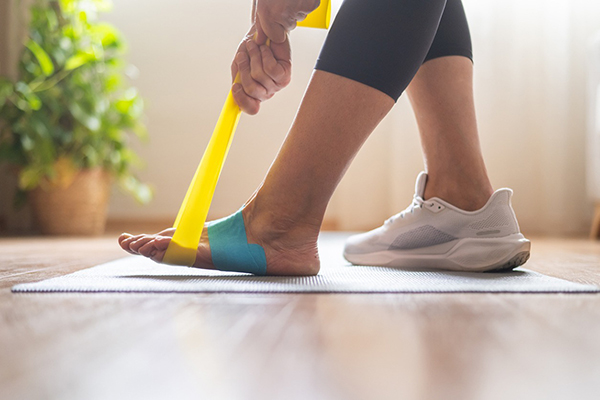
Once your repair can handle stress, therapy drives your progress. Structured physical therapy after ankle surgery is tailored to procedures such as ankle instability repair, total ankle replacement, and Achilles tendon repair.
Your therapy will commonly target:
- Ankle range of motion
- Calf and lower leg strength
- Balance and position sense
- A normal walking pattern without a limp
Consistency pays off. AAOS reports that incomplete rehabilitation is the most common cause of chronic ankle instability after a sprain.1
Stage Four: Conditioning for Daily Life and Sport
After formal therapy, a home program helps you hold on to your gains. Typical foot and ankle conditioning routines last about 4 to 6 weeks, done 3 to 5 times a week, and start with a 5 to 10 minute warm up of walking or stationary biking.
If you are an athlete, your aim is a safe return without a setback. Surgery for athletes aims to return you to your sport as early as possible, using minimally invasive techniques followed by intensive rehabilitation. AAOS adds that your doctor may suggest an ankle brace for sports for several months after a fracture has healed.2
Lowering Your Risk of Reinjury
Reinjury is a real concern, especially after sprains. In research summarized in the Journal of Athletic Training, 40% of those seen in an emergency department for a first ankle sprain had developed chronic ankle instability at 12 month follow up.3
To protect your ankle:
- Finish your full therapy program, even after the pain fades
- Keep up balance and strengthening exercises
- Ease back into sport rather than jumping in all at once
- Wear a brace if your care team recommends one
- Report new instability or swelling early
Setting Realistic Expectations for Your Timeline
Your timeline depends on what was done. AAOS reports that you can usually return to normal activities within 3 to 4 months after an ankle fracture.2 After Achilles tendon repair, full movement typically returns by 6 months, with complete recovery in about a year.
Comparing your progress with a friend's can mislead you. Your procedure, health, and goals all shape your path.
Frequently Asked Questions
How long will it take you to walk normally after ankle surgery?
It depends on your procedure. Many recoveries move from no weight to progressive weight in a boot between 6 and 12 weeks, followed by therapy.
When can you return to running after ankle surgery?
It varies. After a ligament repair, running and jumping usually wait until at least 12 weeks, and some fusions take longer.
Do you need physical therapy after ankle surgery?
You will likely benefit. Therapy restores your motion, strength, and balance, and incomplete rehabilitation is linked to chronic instability.1
Can you reinjure your ankle after surgery?
Yes. Finishing therapy, keeping up strength and balance work, and returning to activity gradually can lower your risk.3
Where can you find an ankle surgeon in Charleston, SC to plan your recovery?
Our foot and ankle team in Charleston, SC can diagnose your problem and build a recovery plan around your goals.
Planning Your Path Forward
A clear plan, steady effort, and good communication with your care team help you move forward with confidence. If you are ready to talk through your ankle and your goals, contact our office in Charleston, SC to schedule a visit.
References
- American Academy of Orthopaedic Surgeons. Sprained Ankle. OrthoInfo. https://www.orthoinfo.org/diseases--conditions/sprained-ankle/
- American Academy of Orthopaedic Surgeons. Ankle Fractures (Broken Ankle). OrthoInfo. https://www.orthoinfo.org/diseases--conditions/ankle-fractures-broken-ankle/
- Hertel J, Corbett RO. An Updated Model of Chronic Ankle Instability. Journal of Athletic Training. 2019;54(6):572–588. https://pmc.ncbi.nlm.nih.gov/articles/PMC6602403/
Dr. Christopher E. Gross is a board-certified orthopedic surgeon specializing exclusively in foot and ankle care. He has extensive experience treating a wide range of conditions, from sports injuries and ankle arthritis to complex deformities and revision surgery. With expertise in advanced procedures such as total ankle replacement, ligament reconstruction, cartilage restoration, and minimally invasive techniques, Dr. Gross is committed to providing personalized, evidence-based care that helps patients restore mobility, reduce pain, and return to the activities they enjoy.