

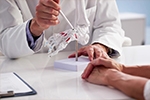

Foot or ankle pain can quietly change the way you live, making it harder to walk comfortably, exercise, work, travel, or enjoy the activities that keep you moving. While rest may help some injuries, persistent symptoms often require a closer evaluation. Identifying the source of your discomfort is an important first step toward recovery. Learn how a foot surgeon in Charleston, SC can help you return to an active life.
Understanding Why Foot and Ankle Pain Is Limiting Your Activity
The foot and ankle contain numerous bones, joints, tendons, ligaments, and cartilage surfaces that work together with every step. An injury, deformity, arthritis, or chronic condition affecting these structures can cause pain, swelling, stiffness, instability, and reduced mobility.
A foot and ankle orthopedic surgeon in Charleston, SC, evaluates a broad range of conditions affecting these structures. A comprehensive assessment can help determine whether symptoms are related to arthritis, tendon damage, cartilage injury, instability, a fracture, or another underlying problem.
Diagnosis may involve a physical examination and imaging studies. Understanding the cause of the problem helps guide treatment rather than simply addressing symptoms.
When Nonsurgical Treatment May Be the First Step
Surgery is not always necessary. Depending on the diagnosis and severity of the condition, treatment may initially focus on conservative approaches designed to reduce symptoms and improve function.
These may include:
- Activity modification
- Physical therapy and rehabilitation
- Bracing or supportive footwear
- Medications when appropriate
- Orthotics
- Injections for selected conditions
The goal is to help patients maintain or regain mobility while avoiding unnecessary procedures. If symptoms continue despite appropriate nonsurgical treatment, surgical options can be considered based on the patient's condition, lifestyle, and activity goals.
Specialized Foot and Ankle Surgery for Complex Conditions
Some problems require specialized surgical expertise. Foot and ankle surgeons may use procedures ranging from minimally invasive and arthroscopic techniques to complex reconstruction.
For example, ankle arthroscopy can be used to evaluate and treat certain problems within the joint, including some cartilage injuries. Patients with osteochondral lesions may require treatments designed to address damage involving both cartilage and underlying bone.
Other procedures may address Achilles tendon injuries, ligament instability, foot deformities, fractures, or complex reconstruction.
Treating Ankle Arthritis and Considering Total Ankle Replacement
Ankle arthritis can gradually make everyday activities more difficult. Pain and stiffness may interfere with walking, exercise, sports, and other activities that once felt routine.
For patients with severe, end-stage ankle arthritis, total ankle replacement may be an option. The procedure replaces damaged portions of the ankle joint with an implant and is intended to relieve pain while preserving joint motion.
However, total ankle replacement is not suitable for every patient. Factors such as bone quality, alignment, joint stability, activity level, and overall health need to be evaluated before determining whether it is an appropriate treatment.
When Revision Foot and Ankle Surgery Is Needed
Patients who continue to experience pain or functional problems after previous foot or ankle surgery may benefit from a specialized evaluation. Revision surgery can be more complicated because the surgeon must account for previous procedures, existing implants, scar tissue, bone quality, alignment, and the original reason for surgery.
Our practice has a particular focus on complex foot and ankle problems, including revision cases. The first step is determining why symptoms have persisted and whether another procedure could improve stability, alignment, pain, or function.
Rehabilitation Helps Support a Return to Activity
Getting back to an active lifestyle involves more than the surgical procedure itself. Rehabilitation is often an important part of recovery, helping restore strength, mobility, balance, and confidence.
Depending on the condition and procedure, recovery may involve immobilization, protected weight-bearing, physical therapy, and a gradual progression toward normal activities. The timeline varies from one procedure to another, so patients should follow their individualized rehabilitation plan.
FAQs About Foot Surgery in Charleston, SC
When should I see a foot surgeon for foot or ankle pain?
Consider seeing a foot surgeon if pain persists, repeatedly returns, limits walking or exercise, follows a significant injury, or does not improve with appropriate nonsurgical treatment.
Can a foot surgeon treat ankle arthritis without surgery?
Yes. Depending on the severity of arthritis, treatment may include activity modification, physical therapy, bracing, medications, orthotics, or injections. Surgery may be considered when these approaches do not provide sufficient relief.
What conditions does a foot and ankle surgeon treat?
A foot and ankle surgeon can treat conditions involving the bones, joints, tendons, ligaments, cartilage, and alignment of the foot and ankle. Examples include arthritis, Achilles tendon injuries, ankle instability, fractures, cartilage injuries, deformities, and complex reconstruction.
How long does it take to recover from foot or ankle surgery?
Recovery varies depending on the procedure and the individual. Some procedures allow relatively early movement, while complex reconstruction and ankle replacement can require several months of progressive rehabilitation.
Can I return to sports after foot and ankle surgery?
Many patients can eventually return to appropriate physical activities following recovery. The timing and type of activity depend on the diagnosis, procedure, healing process, rehabilitation, and individual goals.
Take the Next Step Toward an Active Lifestyle
Persistent foot or ankle pain does not necessarily have to limit the activities you enjoy. In Charleston, SC, a thorough evaluation by Dr. Christopher E. Gross can help identify the underlying problem and clarify appropriate treatment options. Whether conservative care, reconstruction, cartilage treatment, revision surgery, or ankle replacement is being considered, understanding your options is an important part of moving forward.
Dr. Christopher E. Gross is a board-certified orthopedic surgeon specializing exclusively in foot and ankle care. He has extensive experience treating a wide range of conditions, from sports injuries and ankle arthritis to complex deformities and revision surgery. With expertise in advanced procedures such as total ankle replacement, ligament reconstruction, cartilage restoration, and minimally invasive techniques, Dr. Gross is committed to providing personalized, evidence-based care that helps patients restore mobility, reduce pain, and return to the activities they enjoy.